

ACUPOINT RENO | INDEPENDENT LOCAL GUIDE
Electroacupuncture in Reno: How It Works and Safety
Electroacupuncture uses gentle electrical pulses through selected acupuncture needles. Studies found some improvements in knee and neck problems, but this technique needs extra safety checks. Here is what it feels like, what research shows, and when to avoid it.
Last updated: November 2026
Key Takeaways
- Small current passes through selected needles, rather than relying on hand movements alone.
- Some trials found better pain-related function than comparison care.
- Adding electricity has not consistently shown better results than hand needling.
- Pacemakers, defibrillators, seizures, pregnancy, and blood thinners need safety screening.
- Chest pain, fainting, or a seizure during treatment needs urgent medical attention.
How does electroacupuncture differ from hand needling?
Electroacupuncture, also called electrical needle stimulation, sends gentle pulses through selected acupuncture needles. The acupuncturist connects small wires to the needles and controls the current with a device. New Zealand acupuncture safety guidance explains how the current is adjusted slowly.
With regular hand needling, the acupuncturist may gently move or turn the needles. This approach gives repeated pulses without repeatedly moving needles by hand. Both use needles and require consent. If you prefer no current, you can ask about another approach. For a needle-free method, our ear seeding guide explains small seeds or beads taped to the outer ear.
| Method | How it works | What you may feel |
|---|---|---|
| Hand needling | Needles are placed and sometimes moved gently | Pressure or a dull ache |
| Electrical needling | Current passes between selected needles | Soft tapping, tingling, or small twitches |
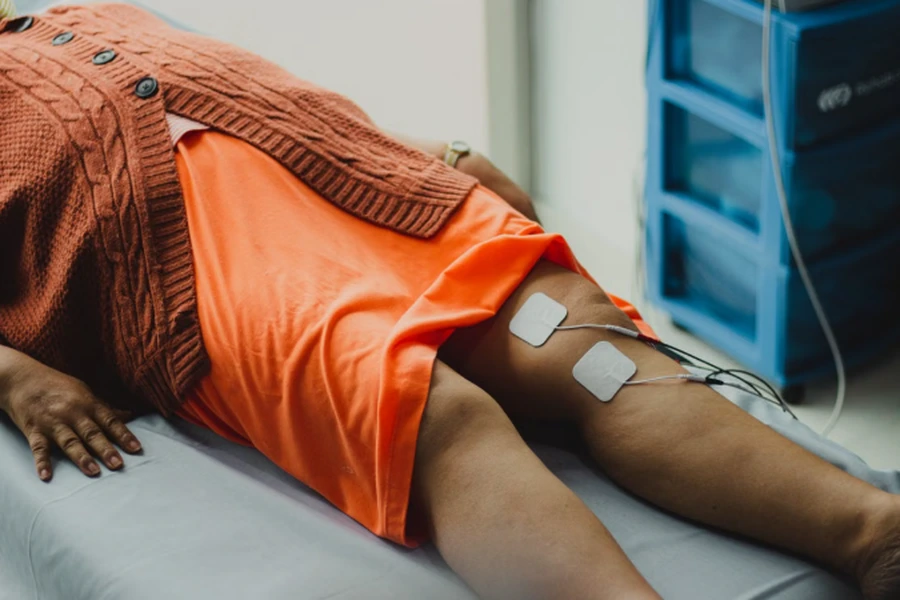
The equipment is different from electrode pads placed on unbroken skin. NCCIH describes the needle-based approach and general safety. Before choosing a session, ask the acupuncturist to explain what the wires will connect to and why.
The acupuncturist can change the pulse setting without removing the needles. You can ask them to begin with a gentle setting and explain each adjustment. You should know how to ask for the current to stop before the device starts. It is not necessary to endure a strong sensation.
Ask whether the pulses may cause tingling or a small muscle twitch. These feelings are not identical, and you can explain which sensation is comfortable. A session can be stopped even if the planned treatment time has not finished. You have a say in how the equipment is used.
What are the benefits of electroacupuncture?
Some trials found better outcomes with electrical needle stimulation than with comparison treatments:
- A 2026 knee trial found less knee pain and easier everyday movement than pretend acupuncture.
- A 2025 neck trial found less difficulty with daily activities than pretend treatment.
- A 2024 nerve study found fewer chemotherapy-related nerve symptoms than usual care alone.
- A 2020 back-pain trial found less disability in everyday life than pretend needling.
- A 2017 sciatica trial found less leg pain than another electrical treatment.
These outcomes describe particular study groups, not a promised result for everyone. Medical assessment is still needed to understand the cause of symptoms.
What do studies show for different conditions?
The evidence is mixed. Some trials found an advantage, while others found no clear difference. Pretend acupuncture means a comparison procedure that resembles real needling without its full intended stimulation.
These findings compare treatment groups rather than changes within one group. Each condition and comparison tells a different part of the story:
- 2026, chemotherapy-related nerve symptoms: A study combined hand and electrical needling. Its main numbness result did not clearly improve compared with the control group. Because two approaches were combined, the study cannot isolate an effect from electrical current. This finding is about people receiving particular cancer medicines, not every cause of numbness.
- 2026, knee arthritis: A trial included 480 adults. Pain and everyday movement improved more than with pretend treatment [3]. Researchers also checked knee scans, but did not establish that worn cartilage grows back. Improvement in how someone moves is not the same as repairing the joint.
- 2025, long-term neck pain: A trial involving 98 people found better activity scores after ten treatment visits [4]. These scores describe how much symptoms interfere with ordinary activities. They do not mean the same treatment helps every cause of neck pain. A clinician should assess new or worsening symptoms.
- 2024, chemotherapy-related nerve symptoms: A small trial found fewer new nerve problems when electrical needling was added to usual care [5]. Participants were receiving cancer treatment. You should not assume the same result for diabetes-related neuropathy or a pinched nerve. Discuss any needling with your treating team.
- 2020, long-term back pain: In a trial involving 121 adults, everyday function improved more than with pretend needling, but pain scores showed no clear difference [6]. Function describes the ability to do regular tasks. A better function score does not mean that pain itself improved more. Both outcomes matter when choosing care.
- 2020, knee arthritis and hand needling: A small pilot found no clear advantage over regular hand needling after eight weeks. This compared two active ways of stimulating needles. It did not establish that electrical pulses are always better. Results can differ when researchers compare a treatment with hand needling rather than with pretend treatment.
- 2017, disc-related sciatica: A trial of 100 people found less leg pain than another electrical treatment applied through the skin [7]. The comparison did not involve pretend needling. The study concerned a particular type of leg pain linked to the spine, so it cannot speak for every painful leg symptom.
When reading these findings, ask what was compared, which symptom was measured, and whether the people studied had a diagnosis like yours. A change in knee movement is different from a change in nerve symptoms. Your healthcare professional can help relate the findings to your own care.
Only certain conditions and study groups have been tested. These published guides explain the related health concerns:
| Condition | What was studied | Important distinction |
|---|---|---|
| Knee pain | Pain and movement with knee arthritis | Not proven cartilage regrowth |
| Neck pain | Pain-related difficulty with daily tasks | Not every cause of neck pain |
| Back pain | Daily function and pain | Function and pain results differed |
| Sciatica | Leg pain linked to a disc problem | Compared with another electrical method |
| Neuropathy | Nerve symptoms during chemotherapy | Not every neuropathy cause |
What might the electrical pulses feel like?
You might notice light buzzing, pulsing, or tapping after the current begins. A nearby muscle can twitch slightly. The acupuncturist should start gently and check your comfort as the setting changes.
A needle going into the skin may cause a quick pinch. The electrical part should not be sharply painful or frightening. Tell the acupuncturist if you feel any sharp pain or discomfort. You can ask to lower or stop the current whenever you wish.
Some people have numb areas because of nerve problems. If skin feeling is reduced, it may be harder to sense a strong current. Tell the acupuncturist about numb areas before the session. You do not have to tolerate a strong pulse for treatment to count.
If the feeling changes while the needles remain in place, tell the acupuncturist whether the new setting is comfortable. You can agree on a simple way to request a pause before treatment begins. For example, saying “stop” should be enough to have the current switched off. A gentler session is a reasonable request.
What happens during a session?
The acupuncturist should ask about your symptoms, medicines, medical implants, seizures, and pregnancy before treatment. They should also inspect the skin and explain where the needles and wires will be placed. You can ask questions or decline the electrical part.
Thin, sterile, single-use needles are inserted at selected points. Small wires are connected, and the current is raised gradually while you report how it feels. The device should be switched off before removing the wires and needles.
Ask how the electrical device is switched off and who will monitor it. The acupuncturist should remain available if anything feels uncomfortable. You may ask for a pause or stop at any point. You can still discuss other care if you do not want electrical stimulation.
Current should not be directed across the chest or the front of the neck. Our first-visit guide explains preparation, consent, and common needle sensations.
Before the device begins, ask whether the acupuncturist will stay close and how they will monitor the current. You should know how to get help if a needle or pulse becomes uncomfortable. The stimulation should be turned off before the leads are removed, and your comfort should be checked afterward.
You can ask the acupuncturist to explain what happens if you need to pause. You should not have to stay still with an uncomfortable sensation because a timer is running. At the end, ask which areas were treated and whether you need to watch for any changes. You can decide against further electrical treatment after trying a session.
How many visits did clinical trials use?
Selected trials used 10 to 18 visits across five to six weeks. These schedules are research methods, not recommendations for everyone. The published trial reports described:
- 2026 knee arthritis trial: Eighteen sessions over six weeks, three each week [3].
- 2025 neck pain trial: Ten sessions over five weeks, twice weekly, with about 30 minutes of stimulation [4].
- 2020 chronic back pain trial: Twelve sessions in six weeks, twice weekly, with about 30 minutes of stimulation [6].
The appropriate care plan depends on the medical problem and how you respond. Ask how pain, daily activities, and side effects will be reviewed. Do not assume a longer schedule is better. You can discuss other treatment choices with your healthcare professional.
When should a session stop for urgent care?
Stop electrical stimulation immediately if serious symptoms begin during a session. Seek urgent medical help for:
- Chest pain or pressure: Especially with trouble breathing, sweating, or a fast heartbeat.
- Fainting or collapse: Passing out, severe weakness, or difficulty waking up.
- A seizure: Especially a first seizure, one lasting longer than five minutes, or breathing trouble afterward.
Call emergency services for these symptoms. The American Heart Association describes serious chest warning signs and CDC explains seizure first aid and emergencies. Do not restart the electrical device while arranging care.
If someone has a seizure, remove nearby hazards to prevent injury. Do not hold them down or put anything into their mouth. Stay nearby and follow emergency guidance until help is available.
Who should avoid electrical stimulation or take extra care?
Electrical needle stimulation needs careful screening. Tell the acupuncturist about medical devices, medicines, allergies, and other health conditions:
- Pacemakers and defibrillators: Avoid current with implanted heart devices. Ask for specialist advice about other implanted electrical devices.
- Seizures or epilepsy: Avoid this method with unstable epilepsy. If you have a seizure history, ask your clinician first.
- Pregnancy: Safety is not established for every placement. Discuss any electrical treatment with your pregnancy clinician first.
- Skin and metal allergies: Do not needle through broken, irritated, or infected skin. Mention allergies to nickel, steel, or other needle metals.
- Blood thinners: Tell the acupuncturist about medicines or conditions that increase bruising or bleeding.
- Chest and neck: Do not pass the electrical current across the heart, chest, or front of the neck. Chest needling carries other injury risks.
FDA guidance on electrical stimulation discusses cardiac devices and unsafe current placement. NHS acupuncture advice covers seizure history, skin infections, metal allergies, and blood thinners. Our needle safety guide gives more detail.
Older adults, children, teenagers, and people with reduced skin feeling may need individual advice. A method that is safe for hand needling may not be suitable after electrical current is added.
How does this technique fit with other care?
This method is one possible addition to care for selected pain or nerve conditions. It cannot tell you why weakness, numbness, or serious pain began. Your healthcare professional may recommend medical tests, exercise, medicine, or physical therapy.
Needling does not replace medical care. Our guide to choosing a Nevada acupuncturist explains license checks and useful safety questions. The Conditions hub explains the health concerns mentioned above.
Start with the guide for your health condition and compare it with this guide to the technique. The two answer different questions. One describes why your symptoms need assessment; the other explains what adding current to needles involves. Ask whether studies looked at people with symptoms similar to yours.
If several options are available, describe what matters most to you. For example, you may be more concerned about walking, sleep, or carrying out everyday tasks than a single pain score. Discuss with your clinician which treatments address those goals and how progress will be checked.
Frequently Asked Questions
Does electrical needle stimulation hurt?
Usually not sharply painful, though you may notice gentle tapping, tingling, or pulsing. The acupuncturist should begin with a low setting and check your comfort. A nearby muscle may move slightly during stimulation. Tell them immediately if the sensation hurts, and ask them to switch the device off. You can decline electrical current at any time, even after needles have been placed.
Is electrical needling better than hand needling?
No, not consistently. A 2020 knee trial found no clear difference between electrical and hand-stimulated needles [9]. A larger knee trial compared electrical needling with pretend treatment, a different question. Your symptoms, health history, and preferences matter when choosing a method. Ask why electrical pulses are being suggested instead of assuming they must work better.
Can someone with a pacemaker receive electrical needling?
No, this technique should generally be avoided with a pacemaker or implanted defibrillator because current could interfere with the device. Other implanted electrical devices also need specialist guidance. Tell both your acupuncturist and your device care team about every implant before treatment. Regular hand needling is different, but it too requires a separate safety assessment.
Are repeated visits usually required?
Yes, clinical trials often used several visits, but there is no fixed schedule for everyone. A 2026 knee trial used eighteen visits over six weeks [3], while a 2025 neck trial used ten over five weeks [4]. These schedules were chosen for research rather than routine care. Ask how your comfort, symptoms, and daily activities will be reviewed before planning repeat visits.
Has electrical needling been studied for nerve symptoms?
Yes, a small 2024 trial studied nerve symptoms during chemotherapy and found fewer new symptoms than with usual care alone [5]. That finding does not apply automatically to every cause of neuropathy. Read our neuropathy guide for more context. Ask your treating clinician about whether needle treatment is suitable, especially if your skin has reduced feeling or you are receiving cancer care.
Does insurance cover electrical acupuncture in Reno?
Possibly. Coverage depends on the health plan, diagnosis, provider network, and how electrical stimulation is billed. Coverage for one medical condition may differ from another. Our Reno acupuncture insurance guide explains questions about covered diagnoses, referrals, and annual visit limits. Call your insurer before arranging treatment with an outside provider, and ask for the answer in writing.
Considering this technique in Reno
This technique adds controlled current to selected acupuncture needles. Some studies found benefits for particular pain-related measures. Electroacupuncture is not suitable for everyone, so safety checks matter as much as the possible benefits.
Ask a healthcare professional if this approach is right for your condition. Our Nevada choosing guide can help you ask about experience with electrical devices and needle safety. You can always decide on a different form of care.
References
- Chinese Medicine Council of New Zealand. Safety in Chinese Medicine Clinical Practice Guidance: Electroacupuncture. 2023. Accessed November 2026.
- National Center for Complementary and Integrative Health. Acupuncture: Effectiveness and Safety. Accessed November 2026.
- Hang M, Shao Y, Lu W, et al. Electroacupuncture for knee osteoarthritis: a multicentre randomised controlled trial assessing symptomatic and structural efficacy. EClinicalMedicine. 2026;96:103982. PMID: 42232684.
- Li W, Liu X, Lin J, et al. Clinical Efficacy of Electroacupuncture in the Treatment of Chronic Neck Pain: A Randomized Clinical Trial. J Pain Res. 2025;18:2909-2922. PMID: 40524896.
- Yao Y, Zhang X, Ge R, et al. Electroacupuncture for the prevention of chemotherapy-induced peripheral neuropathy: a randomized controlled trial. Zhongguo Zhen Jiu. 2024;44(12):1388-1394. PMID: 39658376.
- Kong JT, Puetz C, Tian L, et al. Effect of Electroacupuncture vs Sham Treatment on Change in Pain Severity Among Adults With Chronic Low Back Pain: A Randomized Clinical Trial. JAMA Netw Open. 2020;3(10):e2022787. PMID: 33107921.
- Zhang X, Wang Y, Wang Z, et al. A Randomized Clinical Trial Comparing the Effectiveness of Electroacupuncture versus Medium-Frequency Electrotherapy for Discogenic Sciatica. Evid Based Complement Alternat Med. 2017;2017:9502718. PMID: 28491116.
- Ohno S, Inokuchi H, Kasuya D, et al. Acupuncture for Taxane-induced Peripheral Neuropathy: A Randomized Controlled Trial. Anticancer Res. 2026;46(8):4745-4753. PMID: 42527066.
- Wang TQ, Li YT, Wang LQ, et al. Electroacupuncture versus manual acupuncture for knee osteoarthritis: a randomized controlled pilot trial. Acupunct Med. 2020;38(5):291-300. PMID: 32022581.
- American Heart Association. Warning Signs of a Heart Attack. Accessed November 2026.
- Centers for Disease Control and Prevention. First Aid for Seizures. Accessed November 2026.
- U.S. Food and Drug Administration. Guidance Document for Powered Muscle Stimulator 510(k)s. Accessed November 2026.
- North Tees and Hartlepool NHS Foundation Trust. Acupuncture: Patient Information. Accessed November 2026.
This information is provided for general educational purposes and is not a substitute for professional medical advice, diagnosis, or treatment. Always consult a qualified healthcare provider regarding your specific condition before starting or changing any treatment.