

Acupoint Reno | Research guide
How Acupuncture Works: Science and Evidence
How acupuncture works may involve nerve signals traveling from the skin to the brain. Thin needles stimulate nerve endings beneath the skin. Researchers study how these signals may influence pain.
Last reviewed: November 2026
What Should I Know About How Acupuncture Works?
Key Takeaways
- Acupuncture may work by sending small signals through your nerves that change how your brain handles pain.
- Studies show possible benefits for back pain, migraine, knee arthritis pain, and tension headaches.
- In these studies, people who had real acupuncture usually felt better than people who did not get acupuncture.
- Real acupuncture also did a little better than a pretend version of the treatment, which researchers use for comparison.
- Choose a licensed practitioner and share your medical history before you start.
Key Takeaway: Understanding how acupuncture works helps you read the research on pain with more confidence.
How Does Acupuncture Work in the Body?
Fine acupuncture needles touch tiny sensors called nerve endings in the skin and nearby tissue. These sensors carry messages toward the spinal cord and brain. This is one way scientists explain how acupuncture works through the body’s pain pathways.
- Needles stimulate nerve endings. The endings send small electrical messages along nearby nerves.
- Messages travel toward the brain. Parts of the brain that handle pain may turn that signal up or down.
- The person’s pain experience can change. Scientists continue studying which pathways contribute most.
The NIH overview describes effects on the nervous system and nearby tissues. Expectations and the care a person gets during a session may also play a part. In many studies, researchers compare real acupuncture with a pretend version, such as needles placed away from the traditional points. This shows what the real treatment adds.
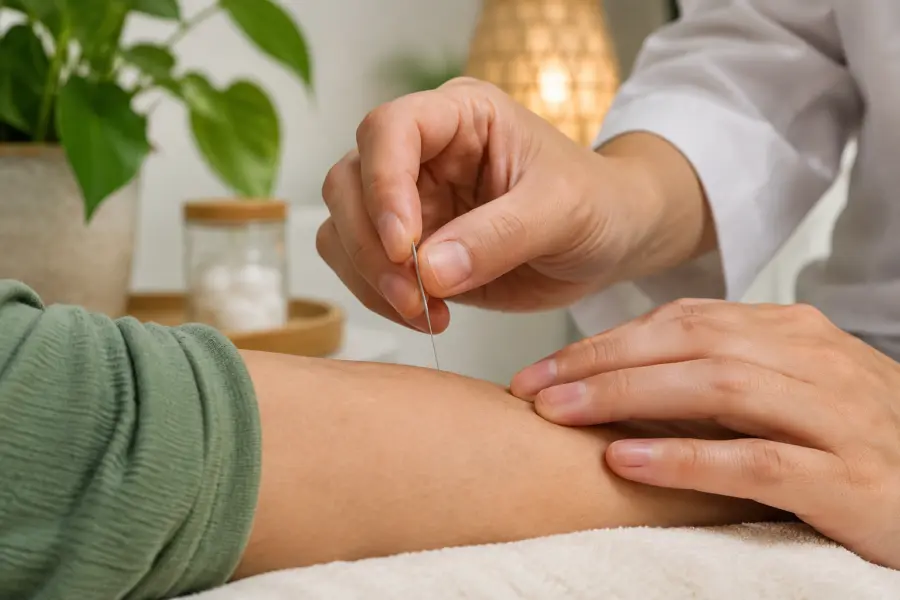
Key Takeaway: Acupuncture stimulates nerves that communicate with the body’s pain-processing systems.
Can Acupuncture Help With Chronic Low Back Pain?
A 2026 review examined about 1,100 adults with ongoing lower back pain. Researchers found less pain and disability after acupuncture than with usual care, meaning the regular treatment people get without acupuncture. Disability means difficulty with daily activities, such as walking or sitting.
The studies measured:
- Pain ratings shortly after treatment and at later follow-up.
- Disability scores over the same periods.
Examples of usual care included physical therapy, education, medicines, and exercise. Acupuncture groups improved more on average. Researchers say the evidence is not strong enough yet to show exactly how big the benefit is.
Key Takeaway: Acupuncture is a reasonable option to discuss for ongoing lower back pain.
Can Acupuncture Help Prevent Migraine Attacks?
A Cochrane review combined studies involving nearly 5,000 people with migraine. (Cochrane is a group that combines results from many medical studies.) Researchers found fewer migraine attacks among people receiving acupuncture. They also compared acupuncture with preventive medicines.
They measured:
- How often migraine attacks or headache days occurred.
- How many people halved their migraine frequency.
- Side effects and how many people stopped treatment.
Real acupuncture helped more than usual care. People who got the pretend version improved too, so real acupuncture’s extra benefit over it was smaller. Participants reported fewer side effects than with preventive medicines in the comparisons studied.
Key Takeaway: A course of acupuncture may help prevent migraines for some people.
Can Acupuncture Help With Knee Osteoarthritis Pain?
Osteoarthritis means a joint changes over time and becomes painful or stiff. A large analysis covered several chronic pain conditions, including osteoarthritis. Researchers found better average pain outcomes after acupuncture.
The analysis measured:
- Pain intensity across the conditions studied.
- Physical function, meaning how well people move and do everyday tasks.
Real acupuncture outperformed both no acupuncture and the pretend version. The gap was larger compared with no acupuncture. NIH notes that most participants with osteoarthritis had knee problems.
Key Takeaway: Acupuncture may help ease knee arthritis pain alongside an appropriate treatment plan.
Can Acupuncture Help With Frequent Tension Headaches?
A Cochrane review examined about 2,300 adults with frequent tension headaches. Researchers found that acupuncture helped reduce headache days. More participants cut their headache frequency by at least half.
The studies measured:
- How often headache days occurred.
- How many people halved their headache frequency.
- Side effects during treatment.
Real acupuncture helped more people than usual care. It also performed somewhat better than the pretend version. Side-effect rates were similar in both needling groups.
Key Takeaway: Acupuncture is worth discussing for frequent tension headaches.
How Can I Choose Safer Acupuncture Care in Reno?
Before booking, check that the practitioner is licensed in Nevada and ask them to explain the treatment first. Use the Nevada Board’s public licensing resources to check credentials. Agree to treatment only after it has been explained.
Federal rules require sterile acupuncture needles labeled for single use. Tell the practitioner about medications and relevant health conditions. Our first-visit guide and Nevada credential checklist offer preparation questions.
Key Takeaway: Check credentials, explain your health needs, and ask about clean needle handling.
What Don’t We Know Yet About Acupuncture?
Scientists are still working out which changes in nerves and tissue bring lasting relief. They also can’t yet predict who will respond best or how many sessions a person needs. Useful results already exist, and research continues.
Key Takeaway: Research can guide your choice, while your response should guide follow-up.
What Questions Do People Ask About Acupuncture?
How does acupuncture work in the nervous system?
A needle stimulates nerve endings in the skin and nearby tissues. Those signals may influence pathways that process pain. NIH describes these nervous-system effects, but responses differ between people.
Is acupuncture just a placebo effect?
Not entirely. Clinical studies found real acupuncture improved some pain outcomes more than the pretend version. Expectations and supportive care also influence symptoms. Ask which research comparison supports a claim.
Can acupuncture help people with chronic back pain?
Yes, it may reduce pain and improve daily function for some people. A 2026 review compared acupuncture with usual care. Discuss your symptoms and options with your healthcare provider.
Can acupuncture reduce migraine attacks?
Yes, studies suggest it may prevent some migraine attacks. A 2016 review found fewer headache days during treatment courses. Ask your clinician how to measure progress without changing prescribed care.
Will one acupuncture session be enough?
Not always. Migraine and tension-headache reviews examined courses of treatment, not one appointment. Ask when progress should be reviewed and what meaningful improvement would look like.
Is acupuncture safe if I take medication?
It depends on the medicine and your health. Tell your practitioner about every medication you take. U.S. rules require sterile acupuncture needles labeled for single use. Ask a healthcare provider about risks specific to you.
Key Takeaway: Ask which evidence relates to your symptoms and what treatment involves.
What Should I Do Before Trying Acupuncture in Reno?
Learning how acupuncture works can help you decide whether treatment fits your needs. Discuss your symptoms with a qualified healthcare provider. Then compare licensing, safety practices, and realistic goals before booking.
Acupoint Reno is an independent information guide, not a clinic. We do not offer treatments or accept insurance.
Key Takeaway: Choose a thoughtful next step that suits your health goals.
Which Research Sources Support This Acupuncture Guide?
References
- NCCIH. Acupuncture: Effectiveness and Safety. Mechanisms, pain research, and safety.
- Sotiropoulos S, et al. SICOT-J. 2026;12:7. Eight trials, 1,123 adults. Pain and disability versus usual care; low to very low certainty.
- Linde K, et al. Cochrane migraine review. 2016. Twenty-two trials, 4,985 people. Migraine frequency halved: real acupuncture 50 of 100; pretend version 41 of 100.
- Vickers AJ, et al. Journal of Pain. 2018;19:455-474. Thirty-nine trials, 20,827 participants, measuring pain and function.
- Linde K, et al. Cochrane tension-headache review. 2016. Twelve trials, 2,349 people. Headache frequency halved: real acupuncture 52 of 100; pretend version 43 of 100.
- 21 CFR 880.5580. Acupuncture needle. Sterility and single-use labeling.
- Nevada State Board of Oriental Medicine. Licensing and List of Licensees.
Key Takeaway: These sources explain how acupuncture works and summarize what studies found for common pain conditions.
This information is provided for general educational purposes and is not a substitute for professional medical advice, diagnosis, or treatment. Always consult a qualified healthcare provider regarding your specific condition before starting or changing any treatment.